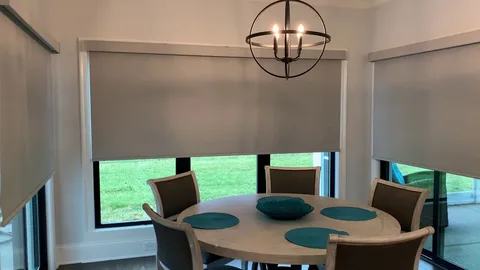
A skilled motorized shades installers team does far more than mount a motor and hand over a remote; they design a shading system that performs reliably for years while fitting the home’s architecture, electrical realities, and daily routines. Homeowners often underestimate how many small design choices affect long-term satisfaction: motor selection and power strategy, fabric and opacity choices, headrail and mounting detail, radio frequency planning, and robust commissioning all matter. Motorized shades installers who take a systems approach — combining careful site survey, clean wiring, thoughtful controls and a documented handoff — deliver a dramatically better experience than crews that treat shade motors as a quick add-on. In the paragraphs that follow I’ll walk through what you should expect from professional motorized shades installers, how to evaluate quotes, how installers solve common retrofit challenges, and what you need to know to protect your investment over the long term.
Why hiring experienced motorized shades installers pays off
Motorized shades installers bring practical knowledge about motor torque, tube diameter, and fabric weight that directly affects performance. A motor sized too small struggles and dies prematurely; a motor sized too large costs more and may be noisy. Experienced installers understand battery versus wired power tradeoffs and can recommend a plan that minimizes maintenance while preserving aesthetics. They know how to select side channels, fascia, or pocketed mounting when blackout is required, and they anticipate problems such as sag over long spans or spring-back behavior in roller mechanisms. DIY or inexperienced installers frequently misjudge these details, which leads to uneven roll, premature motor wear, or disappointing light gaps. The right installers get these technical subtleties right the first time.
The site survey: the step that separates good from mediocre work
Professional motorized shades installers insist on a site survey because windows vary and photos rarely tell the full story. During the survey the team measures frames at several points to check squareness, inspects for adequate mounting blocking inside the header, verifies any required soffit or jamb clearance, and determines access for wiring or battery maintenance. The survey also evaluates sightlines and natural daylight behavior through the day so the installer can recommend fabric openness and whether additional blackout strategies are necessary. A thorough survey also identifies potential RF interference from other devices and plans remote or bridge placement for reliable control. If a quote omits a careful site visit, push back — the survey is central to predictable results.
Motor selection and power strategy: wired, battery, or hybrid
One of the biggest choices motorized shades installers make is the motor and power approach. Battery motors work well in retrofit scenarios and avoid the expense of running conduit; modern rechargeable batteries and solar assist options reduce maintenance burdens when installed thoughtfully. Hardwired motors are the best choice in new construction or high-use zones because they eliminate battery maintenance and can be centralized on low-voltage power buses for simplicity. Low-voltage wired systems with centralized transformers are common for larger or commercial projects because they simplify troubleshooting and add surge and UPS protection. Hybrid approaches—battery motors with occasional wired recharging points or solar trickle chargers—are increasingly popular for mixed situations. The installer should clearly explain the life-cycle tradeoffs between battery replacements, recharging, and hardwired reliability.
Fabric and performance tradeoffs: the right material for the right room
Motorized shades installers don’t just pick pretty fabrics; they consider solar performance, privacy, view retention, acoustic absorption, and fire safety. Open-weave solar screens preserve outward views and reduce glare and solar heat gain but do not block light for a home theater. Blackout fabrics, often used in media rooms and bedrooms, require precise mounting details such as side channels or overlap to eliminate light leaks. For rooms with acoustic issues, layered or acoustical liners can reduce reverberation while preserving light control. Good installers balance aesthetic goals with thermal and acoustic performance and provide samples to test how a fabric behaves in the home’s real light conditions rather than relying on swatches alone.
Mounting, headrails, and finish details
Precise mounting is essential to prevent sag, binding, and visible gaps. Professional motorized shades installers ensure headrails are anchored into solid blocking or stud locations, add center supports for large spans, and level rails to within tight tolerances so multiple shades operate consistently. They advise on concealed pockets or fascia options when a minimal appearance is required and plan for service access so future motor replacement is straightforward. Installation that prioritizes finish details reduces callbacks and makes the shading system feel like an intentional part of the architecture rather than an afterthought.
Controls and RF planning: avoid interference and scale cleanly
Controls are a major source of frustration when ignored. Motorized shades installers map out remote groups, radio channels, and IP-bridge locations to avoid collisions with other RF devices and to provide consistent range across a home. For simple setups a handheld remote or wall keypad suffices; for whole-house installations installers recommend IP bridges to integrate shades into home automation platforms and allow scheduling by time of day and astronomic sunrise/sunset. Installers who neglect RF planning often leave homeowners with spotty reach or unreliable group behavior. Always ask how the installer will group shades, name scenes, and document channel assignments.
Programming, commissioning, and user training
A professional motorized shades installers team programs travel limits precisely to avoid fabric damage and to maximize useful travel. Commissioning includes testing each shade at full travel across seasons to account for thermal changes, verifying scene behavior and scheduling, and stress-testing fallbacks such as manual overrides or local switch control. The installation should conclude with homeowner training: how to operate remotes, how to use timers or app scenes, battery maintenance if relevant, and how to request service. A documented handoff — with channel grouping, usernames for apps, and a simple troubleshooting guide — reduces user anxiety and improves adoption.
Common retrofit challenges and how pros solve them
Retrofits often surface problems that installers anticipate: lack of blocking inside narrow headers, irregular trim that prevents tidy mounting, or historic windows that require custom brackets. Skilled motorized shades installers fabricate or install blocking, choose low-profile fascia, or propose exterior mounting when interior pockets are impossible. They also address obstructions like handles, sills, and muntins, selecting headrail styles and motor orientations that clear hardware. Installing in multi-story or high windows requires safe access planning and often a different motor strategy for longevity. A seasoned team brings pattern experience that turns constraints into elegant solutions.
Warranty, maintenance, and long-term care
A professional motorized shades installers company stands behind its work. Confirm the motor manufacturer warranty and ask whether the installer provides a labor warranty and scheduled maintenance options. For battery systems determine recommended recharge or replacement intervals. For hardwired or low-voltage systems ask whether they provide surge protection and UPS options to avoid damage during storms. Good installers also leave a spare remote or a clearly documented method to recover manual control in the event of a bridge or cloud outage. Understand the steps to request service and how quickly the installer commits to respond — a local warranty partner with rapid follow-up preserves the homeowner’s confidence.
How to evaluate quotes and choose an installer
When comparing proposals from motorized shades installers pay attention to scope clarity: does the quote include a site survey, blocking or structural work, precise motor and fabric models, channel/group programming, commissioning, and a handoff packet? Beware low bids that omit commissioning or wiring. Ask for examples of past work and references with similar window types or project scale. Clarify whether the installer will integrate shades with your home automation system and whether that integration includes licensed drivers or cloud bridges. The best installers communicate tradeoffs clearly and produce a written plan for finals such as color match and acceptance criteria.
Final thoughts: treat shades as an integrated system
Motorized shades are more than moving fabric; they are an integrated system combining mechanical, electrical, RF and software layers. The difference between a shading system that delights and one that frustrates is in the installation: a careful site survey, the right motor and power plan, precise mounting, RF planning, robust commissioning, and clear documentation. Choose motorized shades installers who treat the job as systems work rather than cosmetic add-ons, and you’ll get a shading system that improves comfort, protects furnishings, and behaves reliably for years.